
What do you imagine when you hear Financial Security?
Many people picture a comfortable savings account, a stable job, and the ability to plan confidently for the future. But for thousands of hardworking families, Financial Security looks much simpler.
It looks like being able to pay rent and utilities in the same month. It is where neighbors can fill a prescription without sacrificing groceries. It is having enough left over at the end of the month to save for an emergency.
For many of our neighbors, these basic goals remain out of reach.

In Michigan, nearly 2 in 5 households are living in financial hardship.
Yet the reality is more complex than many people realize. While 13% of households live below the federal poverty line, another 26% are ALICE households—Asset Limited, Income Constrained, Employed—earning too much to be considered for assistance programs, but not enough to afford the essentials where they live.
Together, that means 40% of Michigan households are struggling to make ends meet.
These are our neighbors, coworkers, caregivers, and friends. They are the child care providers who make it possible for parents to work. The cashiers who keep stores running. The food service workers, delivery drivers, home health aides, and countless others whose labor keeps our communities moving forward. Yet many are struggling to afford the very basics they help provide for everyone else.
When you can’t afford the basics, everything else gets harder.
Rent or groceries? A job interview or child care? A prescription or a tank of gas? These are the kinds of trade-offs far too many of our neighbors face every single day.
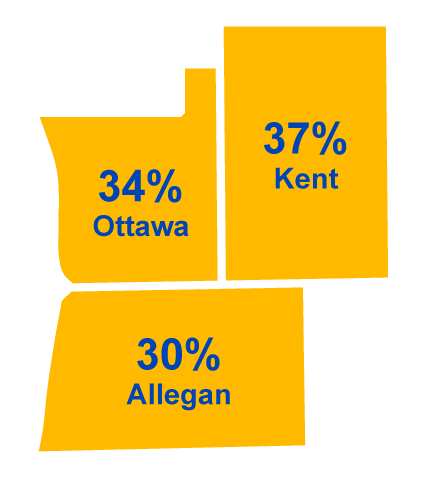
Here in West Michigan, nearly 1 in 3 households are struggling, and it is not for a lack of effort.
People are working, caregiving, and trying, but the cost of living keeps rising and opportunity too often stays out of reach.
The State of ALICE in Michigan reports that the Federal Poverty Level (FPL) is obsolete as it has not been reformulated to account for variation in living and changes in the economic conditions since it was first created in the 1960s. Through the ALICE measures, the Household Survival Budget was created to measure household costs and income. In 2024, the FPL for a family of four was $31,200, but a West Michigan family with two adults, and two children in childcare needed $86,676 annually just to cover basic necessities: Not savings, debt repayment, or building wealth. This budget is simply the minimum needed for families to make it to tomorrow.
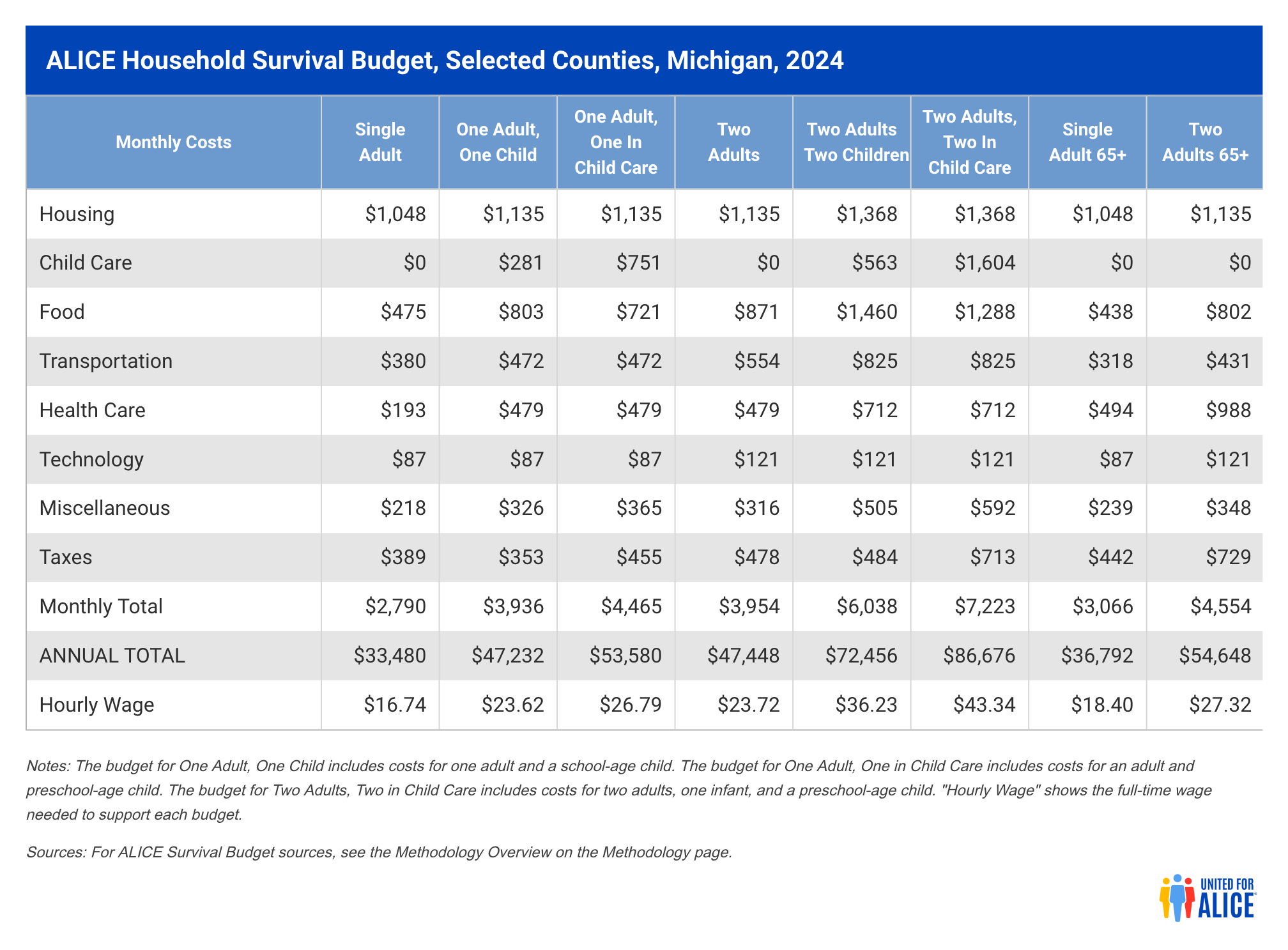
This gap tells an important story.
Poverty is not always visible. Financial hardship does not always look like unemployment. In fact, many households facing the greatest challenges are working. The issue is not a lack of effort, it is that the cost of living continues to rise faster than many families’ ability to keep up.
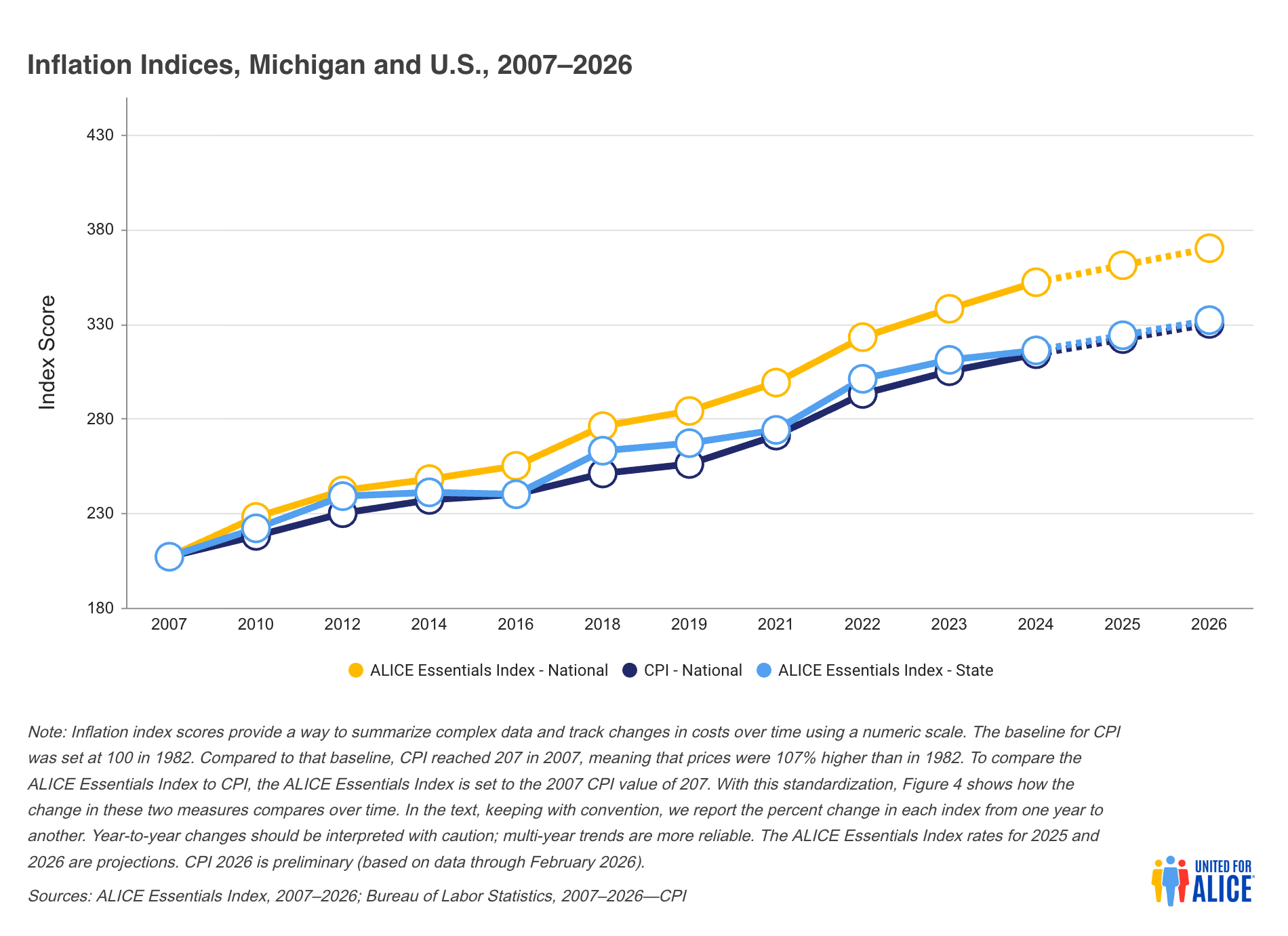
Since the pandemic, the cost of basic necessities has increased at a significantly faster pace than many households can absorb. The ALICE Essentials Index, which tracks the costs that matter most to ALICE families has consistently outpaced broader measures of inflation.

Housing costs consume a growing share of household budgets. Among Michigan households below the ALICE Threshold, 70% of renters spend 30% or more of their income on housing, and nearly half spend more than half of their income just to keep a roof over their heads.
Child care can cost more than a mortgage payment. Transportation is essential to maintaining employment. Health care expenses can derail an already fragile budget. Technology is no longer optional but necessary for work, education, and access to services. When one expense increases, families are forced to compensate somewhere else.
That’s why financial hardship cannot be solved through a single intervention.
A family may find affordable housing but still struggle to access reliable transportation. Someone may secure a better-paying job but lose access to child care. A household may have enough income to get by most months but lack the savings to withstand a medical emergency or car repair.
The Michigan ALICE Report reinforces an important truth: there is no single cause of financial hardship, and there is no single solution. The barriers families face are complex, interconnected, and often compounded by longstanding inequities in housing, education, employment, health care, and access to resources. Lasting change requires coordinated action across systems, sectors, and communities.
That is why Financial Security is the foundation of our work.

When people have stable housing, they are healthier and better positioned to succeed at work and school. When transportation is reliable, employment opportunities expand. When households can build savings, they gain the resilience needed to weather setbacks and pursue long-term goals.
Financial Security isn’t just about surviving. It’s about building something better. It creates a ripple effect that lifts everyone; it strengthens families, supports children, and moves our community forward. It allows people to move beyond survival and begin planning for what comes next.
The data is clear. Financial hardship in Michigan is widespread, persistent, and affecting households across every geography, age group, and demographic. The data also points us toward a solution: building communities where people have access to the resources and opportunities they need to achieve stability.
Because when the foundation is strong, everything else becomes possible.
And that’s what financial security is really about, not just getting by today, but creating the conditions for every neighbor to thrive tomorrow.