When Eight Organizations Become One System: The Story of Project HOME
Housing instability in Ottawa County is growing faster than our systems were built to handle.
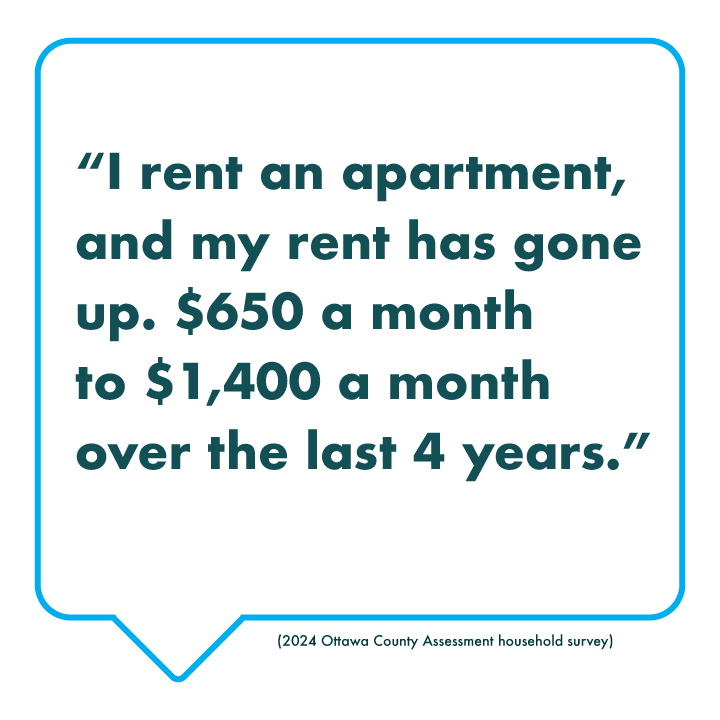
Since 2022, emergency shelter use has nearly doubled. In 2025, more than 1,055 individuals experienced homelessness in our region. The 2026 Point in Time count found 316 of our neighbors unsheltered. More than 422 students in Ottawa County schools experienced homelessness during the 2023–24 school year. These are not statistics about a distant problem. They are our neighbors — people who live, work, and belong in this community — navigating a system that, until recently, wasn't designed to catch them.
That's starting to change.
What Is Project HOME?
Project HOME is a coordinated, three-year initiative bringing together eight Ottawa County organizations around a shared vision: a community where homelessness is rare, brief, and unrepeated.
Convened through the Lakeshore Leadership Council in early 2025 and now led by the Lakeshore Housing Alliance, Project HOME represents something our region has never had before — a full continuum of housing support, from the moment someone loses their footing to the moment they find stable ground, operating as a unified system rather than a collection of parallel efforts.
The eight organizations at the table are:
Community Action House
Community Mental Health Ottawa County
Family Promise of the Lakeshore
Gateway Mission
Good Samaritan
Lakeshore Housing Alliance
Reach for Recovery
The Salvation Army – Holland
Each brings something essential. Together, they cover street outreach, emergency shelter, eviction prevention, master leasing, behavioral health, recovery support, and data infrastructure. The power of Project HOME isn't any single one of those things — it's the fact that they're now connected.
Why This Matters
For years, Ottawa County has had strong organizations doing vital work. What it has lacked is coordination.
A family facing eviction might be referred from one agency to another, asked to tell their story multiple times, and left to navigate paperwork and waitlists on their own. An individual experiencing unsheltered homelessness might be connected to a shelter but have no clear path to behavioral health support or housing navigation. The gaps weren't a failure of effort — they were a failure of infrastructure.
Project HOME is that infrastructure.
When a neighbor enters the system today, the goal is a seamless connection across the continuum — from wherever they are to wherever they need to go — without falling through the cracks. Case conferencing meetings hosted by the Lakeshore Housing Alliance and Good Samaritan Ministries bring service providers together in real time to share information, problem-solve barriers, and ensure no one gets lost. A By-Name List means that individuals experiencing homelessness aren't anonymous — they're known, tracked, and actively supported toward stability.
This is what coordinated care looks like. And it's already working.
Early Results
Project HOME launched publicly on June 16, 2026, but the work has been underway for over a year. Here's what's already been built:
Community Resource Hub. The Salvation Army Holland is concluding renovations of their kitchen and dining room, preparing the way for the new home of Community Action House's Community Kitchen. This move represents the first phase of an envisioned co-located hub — a single location where unsheltered neighbors can access food, showers, case management, housing navigation, and health referrals without traveling between multiple sites.
Master Leasing. Family Promise of the Lakeshore's Master Leasing Family Shelter program has already served nine families — securing stable, long-term homes by bridging the gap between emergency shelter and lasting stability, and keeping children and multi-generational families together during crisis.
Eviction Prevention. Good Samaritan's Ottawa County Eviction Prevention Program has served 718 Ottawa County residents over the past two years — expanding financial education opportunities for clients, strengthening long-term outcome tracking, and building key partnerships to ensure the program's continued stability and success.
New Capacity. Gateway Mission has opened its new Eastport facility, nearly doubling capacity and creating a trauma-informed environment designed to support lasting recovery.
Better Data. The Lakeshore Housing Alliance has hired its first dedicated HMIS Administrator — bringing stronger accountability and better outcomes tracking to the entire system.
United Way's Role
Heart of West Michigan United Way is proud to serve as a fundraising and community engagement partner for four of the eight organizations in Project HOME. Our role is to invest our own resources and mobilize others' — connecting donors, volunteers, and community partners to the work that's changing lives in Ottawa County.
This is exactly the kind of systems-level collaboration our Community Investment Plan is designed to support. When you invest in United Way, you're not picking a single program — you're investing in the infrastructure that makes coordination like this possible. Project HOME is what that looks like in action.
How You Can Be Part of It
Project HOME grows stronger every time someone new decides to get involved. There are several ways to engage:
GIVE » Your philanthropic investment in Heart of West Michigan United Way directly supports the organizations and infrastructure behind Project HOME.
VOLUNTEER » Several partner organizations are actively looking for volunteers.
STAY INFORMED » Follow along as Project HOME develops — including the launch of a public-facing outcomes dashboard that will provide a transparent view of our shared progress.
If you'd like to learn more or connect with our team, reach out to Kevin at knelson@hwmuw.org.